


-
 Written by Ruban Selvanayagam
Ruban Selvanayagam
Written by Ruban Selvanayagam
Ruban Selvanayagam
Ruban Selvanayagam is a professional cash homebuyer, private rented sector landlord, auction specialist, blogger and media commentator.
-
 Edited by James Durr
James Durr
Edited by James Durr
James Durr
James Durr is a passionate property entrepreneur with a strong foundation and background in business.

What is Gazundering?
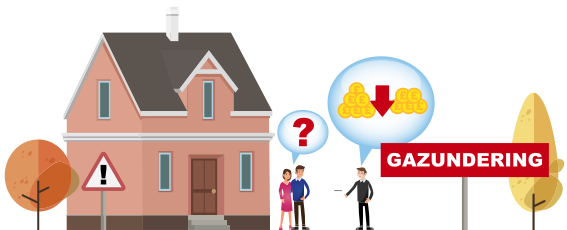
Gazundering is when a buyer reduces their previously agreed offer just before exchange.
It’s effectively the opposite of gazumping. Instead of the seller switching to a higher offer, the buyer attempts to force the price down at the last minute.
It usually happens late in the process – when the seller has spent money on conveyancing, removed the property from the market and mentally committed to moving.
In slower or more uncertain markets, the risk increases. Buyers know sellers often feel they have little choice but to proceed.
Gazundering is unfair – but it remains legal in England and Wales because contracts are not binding until they are exchanged.
Please watch the video I recorded below and/or select Contents above to jump to the sections most relevant to you…
Why Do Buyers Gazunder?
Simple Opportunism
Sadly, the main reason for gazundering is that some buyers wait until the seller is at their most committed and then use that moment to push for a reduction.
Gazundering rarely comes out of nowhere – these are the factors that typically trigger it…
Market Uncertainty
When demand weakens, some buyers become bolder. Falling confidence in the wider economy or negative headlines can trigger last-minute price cuts.
Cold Feet
Sometimes buyers panic, rethink their finances or feel they’ve overpaid – especially if friends or family have planted doubts along the way.
Survey Findings
Survey findings can trigger a price discussion early on, but if buyers delay raising concerns or only act once lenders or contractors quantify the cost, it can still feed into late stage gazundering attempts.
Legal Concerns
Legal issues are usually identified early in conveyancing, but delays in searches, slow solicitor communication or late lender requirements can mean boundaries, title defects or restrictive covenants only become a problem close to exchange.
Chain Issues
If someone further down the chain reduces their offer or their sale stalls, the pressure often moves upwards. Buyers may feel forced to renegotiate to keep their own move alive, even if nothing has changed with your property.
Last-Minute Comparisons with Other Listings
Buyers often keep browsing Rightmove or Zoopla even after their offer is accepted. If they see cheaper or newly reduced homes, they may try to adjust your price.
Stress or Relationship Disagreements
Buying a home can create tension within couples or families. Disagreements about budget, area or priorities can lead one party to push for a reduction late in the process.
Budget Pressures Elsewhere
Unexpected costs – childcare, cars, holidays, bills, credit cards – can make buyers reassess their affordability. Rather than walk away, some try to close the gap by “chipping” the price late.
Concerns About the Wider Economic Climate
Interest rate announcements, inflation spikes or negative housing forecasts can make buyers nervous, even if nothing has changed with your property.
How Common is Guzundering?
There are no official figures, but industry surveys and conveyancers suggest gazundering is far from rare. In slower or more uncertain markets, some estimates indicate it can affect up to 1 in 4 agreed sales.
Periods of rising interest rates and tightening mortgage conditions have also seen a noticeable increase in late-stage price reductions as buyers reassess affordability.
That said, it’s important not to assume every fallen-through sale involves gazundering.
A property returning to the market after being marked Sold STC or Under Offer can happen for many other reasons – slow searches, chain problems, finance issues or simply a buyer changing their mind. Gazundering is one possible cause, but far from the only one.
Is Gazundering Ever Justified?
Most of the time, gazundering it simply isn’t and simply a negotiation tactic used because the buyer thinks the seller has limited room to walk away. Their “back is against the wall” – so to speak.
That said, there are situations where a price discussion may be reasonable, such as:
- Genuine issues raised by the survey that materially affect value and have only appeared close to exchange
- Legal problems emerging late due to delayed searches or missing documents
- A lender change of heart at the last minute
- Affordability pressures caused by delays or changes further down the chain
- The buyer has been gazundered themselves (also often at the last minute), forcing them to adjust their onward purchase.

Even in these scenarios, any reduction should only reflect the genuine cost or risk involved.
And if issues are only surfacing at the final stage, it often suggests something has gone wrong earlier in the process – particularly if the solicitors or surveyors should have identified the problem sooner.
What shouldn’t happen is buyers using these late discoveries as an excuse to force the price down unfairly.
How to Respond (and Deal with) to Gazundering
An unexpected price drop is stressful, but there are clear steps you can take for dealing with gazundering effectively and protecting your sale.
Reject Firmly
Never accept a reduced price straight away. Buyers have invested in surveys and legals too, and many will withdraw or soften the reduction once they realise you’re not prepared to roll over.
Don’t Be Afraid to Walk Away
If the reduction is unreasonable, stepping back can be the right move. You’d be surprised how often buyers reverse their position when they realise the sale genuinely might collapse.
Work With an Experienced (and Trustworthy) Conveyancing Solicitor
A strong conveyancer can spot early signs of bad-faith behaviour and push back before it escalates. They keep pressure on the buyer’s solicitor, keep delays to a minimum and help maintain transaction momentum.
Choose a Proactive Estate Agent
Your agent should thoroughly check the buyer’s mortgage readiness, financial position and chain. Good agents sense unreliability early and keep communication tight so concerns don’t surface at the eleventh hour.
Price Realistically from the Get Go
Overpricing is a major trigger for gazundering. Buyers who overstretch often panic once surveys and mortgage valuations come in, making a late-stage renegotiation far more likely.
Be Cautious With Over Asking Price Offers
Very high offers aren’t always secure. Some buyers bid aggressively to lock the property in, then attempt to chip the price once the deal is underway. Treat unusually strong offers with care.
Prioritise Chain-Free Buyers When Possible
Fewer moving parts mean fewer opportunities for problems. Chain-free buyers are less exposed to delays or renegotiations further down the line, which greatly reduces your risk.
Encourage Early Surveys
The sooner the survey is completed, the less opportunity there is for findings to be used as late-stage leverage. Early surveys give everyone time to address issues fairly.
Keep Previous Viewers and Interested Parties “Warm”
If your home had strong interest, ask your agent to stay in contact with the second and third-choice buyers. Having credible alternatives puts you in a far stronger negotiating position.
Set Clear Timelines
Agree an expected exchange window early so everyone stays focused. Transactions that drift for weeks or months create far more room for doubt, delay and renegotiation.
Be Honest About Known Issues
Hidden defects almost always surface later – usually in a way that strengthens the buyer’s hand. Full transparency reduces suspicion and limits the scope for aggressive price drops.
Consider Sellers’ Protection Insurance
If the sale collapses through no fault of your own, this cover can reimburse legal and mortgage-related costs. It won’t stop gazundering, but it can soften the financial impact.
Speak to the Estate Agent About a Backup Plan
If there has been a lot of interest in your property, it’s sometimes worth speaking with the agent about a plan “B” just in case things go wrong. For example, they may be able to get in touch with other potential buyers who can step in if necessary.
Is It Worth Taking Out Home Seller’s Protection Insurance?
There are policies that cater to protecting sellers when deciding not to proceed after a gazundering attempt.
It won’t prevent gazundering, but it can reimburse key costs such as legal fees, searches and mortgage expenses if the transaction collapses for reasons outside your control. It’s most useful in slower markets, long chains or situations where the buyer’s commitment feels uncertain.
Several reputable providers offer this type of cover, including Rhino Home Protect, Surewise, HomeProtect, and conveyancer-arranged policies through underwriters like Hiscox, Zurich and CLS Property Insight.
For some sellers, it’s a small price to pay for peace of mind. For others, especially where demand is strong or the buyer is chain-free, it may be less essential.
Why Gazundering Doesn’t Happen at Auctions
Auctions remove the risk of gazundering because the sale becomes legally binding the moment bidding ends.
There’s no room for last-minute changes, no opportunity for buyers to renegotiate, and no dependency on drawn-out back-and-forth between solicitors.
Assuming the sale is unconditional (the traditional way auctions work), once the hammer or gavel falls:
- Contracts exchange immediately, fixing the price on the spot
- The buyer becomes legally bound, with no ability to alter the terms
- A 10% deposit is paid, creating a real financial commitment
- Completion dates are set in stone, usually within 28 days
- The buyer faces penalties (owed to the seller) for not completing on the deadline
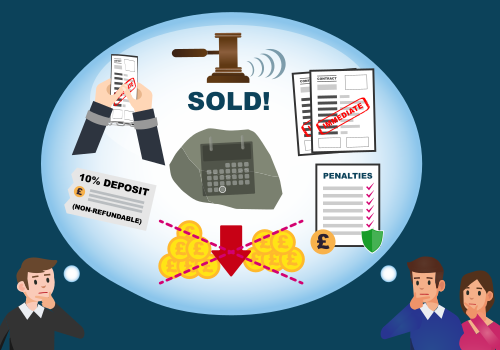
With the legal framework locked in from the outset, the buyer cannot chip the price or introduce new conditions. This is why auctions are increasingly chosen by sellers who want certainty, speed and protection from unreliable buyers or lengthy chains.
Gazundering and Sell House Fast Companies
There is plenty of evidence that some quick sale companies still drop their offer at the last minute – in many cases deliberately – despite the reputational damage it causes.
These firms typically target sellers in difficult situations, knowing they’re back is against the wall as exchange of contract approaches.
Reputable cash buyers do not operate this way. Late-stage reductions undermine credibility, attract complaints and can trigger scrutiny from trade bodies and regulators.
Yet a minority of operators continue to use the tactic under the radar, which is why sellers need to vet companies carefully.
If a fast-sale company reduces its offer unfairly, you can report them to The Property Ombudsman (TPOS) or the National Association of Property Buyers (NAPB).
Property Solvers are also members of NAEA Propertymark, who audit our accounts annually, and we are registered with Trading Standards – giving sellers an additional level of transparency and protection.
How to Vet a Fast House Sale Company
Before working with any quick house sale firm:
- Check Companies House for filed accounts, trading history and directorships (look for stability, not shell companies)
- Look for a visible online presence and check how old the company’s website is on ChatGPT)
- Look out strong reviews and a long, traceable trading record
- Request proof of funds so you know they can genuinely complete
- You can also request or download credit reports for yourself (from agencies like Experian or Check My File).
- Ask for recent completion statements from their solicitor to prove they actually buy property
- Review any agreements with your solicitor so nothing is hidden in the small print
- Ensure there are no hidden fees, penalties or deductions taken at completion
- Be wary of option agreements or restrictions you don’t fully understand or haven’t asked for
- Check whether they’re members of industry bodies like TPOS and NAPB (as a bare minimum)
- Look at how long their domain name and website have existed – many short-term operators appear and disappear quickly
- Search for their company name + “complaints” or “scam” to see if patterns emerge
- Check whether they use their own funds or rely on third-party finance, which can cause delays or renegotiations
- Ask who your legal point of contact will be, and whether you can speak to previous clients for reassurance
- Confirm they will pay your legal fees, and check this in writing, not verbally
- Assess how transparent they are during initial conversations – evasive answers are usually a warning sign.
- Check out the company’s social media presence (namely LinkedIn, Instagram, X (Twitter), Facebook and TikTok)
- Check out the companie social media presence
If the company hesitates to provide any of this information or avoids direct questions, walk away immediately. Reputable firms are open, transparent and able to back up every claim they make.
Note that it’s fairly normal practice for the quick house buyer to run separate companies. These are usually in the form of ‘special purpose vehicles’ (companies that buy individual properties). Other times, the buyer may use a separate trading or holding company. Either way, it’s a good idea to check all the details.
Be Careful of Dubious “Fast House Sale” Legal Agreements
You may find that some fast sale companies may discuss specific legal arrangements. Although there are various ways to structure transactions within the confines of the law, it’s important to check the small print.
For example, if you hear terms like ‘option agreement’ and ‘Land Registry restriction’, make sure you are fully aware of the implications. You don’t want to sign anything that could ultimately work against you.
Here at Property Solvers, for example, we sometimes discuss assisted sales with our clients. This may be an appropriate solution if there are underlying legal problems, the property is in negative equity or in need of an extensive programme of refurbishment works.
On this note, when using a fast house sale company, make sure there are no hidden charges. Your solicitor should flag these up for you.

Property Solvers’ Position on Gazundering
After more than 20 years operating in property sales, we’ve learned that the best way to prevent gazundering is to remove uncertainty from the start.
We front-load our due diligence, verify key details early and only make offers we’re confident we can stand behind. When the groundwork is done properly, there’s little scope for last-minute surprises or price changes.
Alongside our direct fast cash homebuying service, we run both 28-day and 56-day regulated property auctions, giving sellers a legally secure route where the price is fixed the moment the hammer falls.
For those wanting full market exposure without lengthy delays, our express sale service provides a faster, tightly managed alternative to most online and traditional operators.
While a minority of firms in the fast-sale sector still rely on late-stage reductions, our approach is built on transparency and consistency.
Gazundering may be legal, but it isn’t inevitable. If you’d like an honest view of your options — cash sale, express sale or auction – we’re here 7 days a week to help you move forward with certainty.


