

-
 Written by Ruban Selvanayagam
Ruban Selvanayagam
Written by Ruban Selvanayagam
Ruban Selvanayagam
Ruban Selvanayagam is a professional cash homebuyer, private rented sector landlord, auction specialist, blogger and media commentator.
-
 Edited by James Durr
James Durr
Edited by James Durr
James Durr
James Durr is a passionate property entrepreneur with a strong foundation and background in business.

Selling your house can almost feel like a part-time job…
Between estate agents, solicitors and digging through drawers for lost certificates, it’s no wonder moving ranks as one of life’s most stressful experiences.
But simply getting your paperwork organised early can make all the difference – often cutting completion times by up to 50%.
Based on 20+ years of handling house sales across the UK, this guide breaks down the 24 essential documents you’ll need – and what to do if any are missing. If your property’s leasehold, keep scrolling (or click here) for a few extra documents you’ll need to gather.
1. Title Deeds, Official Copy of the Title Register and Title Plan

Your title deeds confirm you legally own the property.
Most homes in England and Wales are now registered digitally with HM Land Registry, which means your solicitor can easily download an Official Copy of the Register and Title Plan for £6 each.
In Scotland, property ownership is recorded separately through Registers of Scotland, and sellers will need to provide a Title Sheet instead.
The register shows who owns the property and any mortgages or restrictions attached to it. The title plan outlines the land and boundaries included in the sale. Buyers’ solicitors rely on both documents to confirm exactly what’s being sold.
Your own solicitor will usually order these early in the conveyancing process – but it’s worth getting a copy yourself if you don’t already have one. Having it ready helps you check the details are correct (particularly names, addresses and boundary lines) and can avoid issues down the line.
Around 1 in 5 sellers we deal with discover their title plan is outdated or missing rights of way. This often arises late in the legal process and can delay exchange by 1-3 weeks while HM Land Registry queries are resolved.
Also, if your property is unregistered (estimated at 15% of all properties in the UK), your solicitor will need to process the documentation before the exchange of contracts. The process can take several weeks (as a minimum), so it’s best to start as soon as possible.
2. Memorandum of Sale

Once you’ve accepted an offer, your estate agent or auctioneer will issue a Memorandum of Sale. It’s the document that officially confirms the deal and kicks off the conveyancing process.
It sets out the key details – including the agreed price, the names of both buyer and seller, alongside the contact information for each party’s solicitor or conveyancer.
Solicitors use it to open files and make initial communication with their respective clients.
3. ID Verification and Client Care Documentation
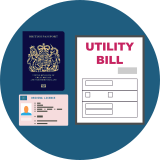
Solicitors and estate agents are required by law to verify your identity before they can act for you. This is part of strict Anti Money Laundering (AML) regulations designed to prevent fraud.
You’ll need to provide photo ID (like a passport or driver’s licence) and proof of address, such as a utility bill or bank statement issued within the last three months.
Many firms now use secure digital portals – such as InfoTrack, Thirdfort, Credas or Landmark – for this process.
4. Property Information Form (TA6)

The TA6 is a standard Law Society form that gives buyers a clear picture of your property – covering things like boundaries, utilities, planning permissions, disputes, parking, flooding and even broadband speed.
It forms part of the legal contract, so accuracy is essential. Leaving out details or guessing answers could lead to misrepresentation claims later.
If you’re unsure about something, note it honestly and check with your solicitor. It’s better to be transparent than risk delays or disputes down the line.
5. Fixtures and Fittings Form (TA10)
The TA10 form sets out exactly what’s included and excluded from your sale – everything from white goods, furniture and light fittings to garden sheds and ornaments. Buyers rely on it to avoid any surprises later.
Think of it as your chance to draw a clear line between what’s staying and what’s going. It might seem minor, but misunderstandings here are one of the most common causes of last-minute disputes.
Be specific – for example, don’t just say “curtains,“ say “living room curtains included, bedroom curtains excluded.“ Clear notes avoid any ambiguity as the sale progresses.
6. Energy Performance Certificate (EPC)
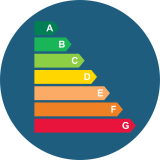
An Energy Performance Certificate (EPC) is a legal requirement before you can market your home. It rates your property’s energy efficiency from A (best) to G (worst) and suggests simple improvements.
We regularly see EPCs expire mid-sale or sellers assume an old certificate is still valid.
You can check if one already exists by searching the EPC Register. Certificates last for ten years, so if yours has expired, you’ll need a new assessment. These are usually arranged by estate agents or auction houses for £60-£120 and completed within a few days. There are also some online platforms which source local EPC assessors.
If you have the time, consider making a few quick upgrades first. Topping up loft insulation, sealing drafts or switching to LED bulbs can lift your rating and make your home more attractive to energy-conscious buyers.
7. Building Regulation Compliance Certificate(s)
If you’ve added an extension, converted a loft or made structural changes, you’ll need proof that the work met Building Regulations. Your local council issues a Completion Certificate once the work has been properly inspected and signed off.
Buyers and mortgage lenders rely on this paperwork because it confirms the property is safe and compliant.
One of the most common issues we see is missing building regulation sign-off for older extensions. Even when the work was carried out decades ago, lenders may still require evidence or indemnity insurance.
Where certificates are missing, this often leads to additional enquiries, slower conveyancing, and – in some cases – the buyer withdrawing from the sale.
If this has happened, your council may be able to reissue it for a small fee. If not, assuming the mortgage lender is satisfied, your solicitor can usually arrange indemnity insurance to cover the gap.
Where works were never signed off, councils can issue a regularisation certificate retrospectively, confirming that the alterations now meet the required standards.
If you’re unsure whether past works were approved, your local Building Control team can check their records. If approval wasn’t granted, they can guide you through retrospective sign-off – where the council inspects the finished work to confirm it meets Building Regulations.
8. Planning Permission Documents

Any structural or external work – such as extensions, conservatories, or garage conversions – may require planning permission or a certificate of lawful development. Buyers will expect to see copies of whatever was granted.
Even smaller alterations can prompt questions, so gather everything you can from your local council or planning portal. Most authorities keep electronic records that you can download instantly.
Providing these documents early reassures buyers that the work was carried out properly and helps avoid slowdowns or unnecessary suspicion.
If some work was done without formal approval, speak to your solicitor before marketing. As with building control documentation, missing permissions can cause issues with mortgage lenders, as anything unclear may affect their security. Indemnity insurance policies these days are unlikely to be accepted.
9. FENSA or CERTASS Certificates

If you’ve replaced windows or doors since 2002, you should have a FENSA or CERTASS certificate to show the work was carried out by a registered installer.
Buyers’ solicitors will almost always ask for this, especially as you’ll need to state the age of the windows and doors on the TA6 form.
If the paperwork has been misplaced, you can order a replacement through the FENSA or CERTASS website for a small fee. Missing certificates can slow things down, so it’s worth sorting early.
10. Gas Safety Record

While not legally required for owner-occupiers, a Gas Safety Certificate (CP12) gives buyers confidence that your heating system is safe and regularly checked.
It’s especially important if the property has been rented out recently or still has a gas fire or older boiler. If you’ve rented a property in the last year, you should already have one (as they’re an annual requirement when renting a property).
You can book a Gas Safe engineer to inspect and issue a certificate within a few days. Costs are typically modest – ranging from £50 to £120 + VAT depending on where you are in the country.
11. Boiler Servicing Records

Related to the above, similar to selling a vehicle, a full service history can be the difference between a confident buyer and one who thinks they need a new boiler straight away.
Keep receipts and service reports for at least the past year – ideally, the last three. If your boiler is still under warranty, include the manufacturer’s certificate too.
If you haven’t had a service recently, booking one before marketing shows buyers you’ve looked after the property.
12. Electrical Installation Certificates (EICR)

Electrical paperwork is another reassurance factor for buyers. If you’ve had new wiring, circuits, or lighting installed, you should have received an Electrical Installation Certificate.
Alternatively, a current Electrical Installation Condition Report (EICR) confirms that the property’s electrics meet modern standards.
Older properties or those with visible DIY work often attract more scrutiny here, so having an up-to-date report avoids awkward questions.
13. Building Insurance Schedule

Your building insurance policy protects the property up until completion, so keep a copy of the latest schedule handy. Buyers’ solicitors often ask for it to confirm cover is in place while contracts are being exchanged.
If you’re selling a leasehold property, building insurance is usually arranged by the freeholder or managing agent. In that case, you’ll need to provide their current insurance certificate instead.
Make sure the insured amount reflects the full rebuild cost – not the market value – and that it includes public liability cover for any shared (communal) areas.
14. Title Restriction or Restrictive Covenant Documents
Many properties have title restrictions or restrictive covenants that set rules about how the property can be used – such as prohibiting business use, extensions and/or boundary changes.
Buyers’ solicitors will pick these up during Land Registry searches, but it helps to have copies ready. They show you understand and comply with any conditions affecting the property.
If a restriction requires another party’s consent (for example, from a previous developer or estate owner), check that this has been properly documented. Missing permissions can cause late-stage delays.
15. Mortgage Redemption Statement
If you have a mortgage secured against your home, your solicitor will request a redemption statement from your lender. This will confirm the exact amount needed to settle the loan on completion.
This figure is valid for a short period, so it’s often updated just before the exchange of contracts to ensure accuracy.
If you have more than one charge or loan secured against the property, make sure your solicitor obtains statements for each. It helps prevent unexpected shortfalls prior to completion.
16. Environmental and Safety Reports (if applicable)
Depending on your property’s location and age, buyers may ask for environmental or safety reports to understand any potential risks. These often relate to flooding, land contamination or construction materials used in parts of all of the property (and the immediate surrounding area).
A flood risk or environmental report highlights whether the home sits near rivers, coastal areas or former industrial land. If you already have one, providing it upfront can speed up legal checks.
Older properties may also require an asbestos report to confirm whether materials have been tested, removed, or safely contained.
For properties affected by Japanese Knotweed, include a professional management plan with an insurance-backed guarantee. Note that some mortgage lenders may still be uncomfortable, even with such plans in place.
17. Listed Building, Conservation Area or Heritage Documentation (if applicable)

If your home is listed or lies within a conservation area, you’ll need evidence that any alterations were properly approved.
Include copies of Listed Building Consents, planning permissions, or correspondence with your local conservation officer. Missing paperwork here can cause serious delays during conveyancing.
You’ll probably be aware that even small changes – such as replacing windows, changing roof tiles or repainting exterior walls – often require formal consent during ownership. It’s worth gathering all proof and permissions before marketing the property, so buyers can see everything is compliant from the outset.
18. Solar or Renewable Energy Installation Documents (if applicable)

If your property includes solar panels, a heat pump or other renewable energy systems, gather all installation certificates and ownership details.
Buyers need to know whether the systems are owned outright or leased under a feed-in tariff agreement, as this can affect mortgage eligibility.
Include your MCS (Microgeneration Certification Scheme) certificates, warranties and service records. These prove the system was professionally installed and properly maintained.
19. Maintenance or Service Agreements
If your property has ongoing maintenance contracts – such as alarm servicing, gardening, pest control or private road maintenance – keep the most recent agreements and invoices.
Buyers’ solicitors like to see these to confirm there are no hidden commitments or transfer fees. It also helps new owners continue essential services without interruption.
Even small recurring services, like boiler cover or alarm monitoring, are worth noting – it’s all part of showing your home is well cared for.
20. Indemnity Insurance Policies

If certain documents are missing – such as building regulation certificates, planning permissions or long-expired guarantees – your solicitor may recommend indemnity insurance.
These policies don’t resolve the original issue, but they protect buyers and lenders against future claims or enforcement action. It’s often the simplest way to deal with gaps without reopening old work.
Preparing for this early makes a real difference. If you identify missing paperwork before marketing, your solicitor can line up suitable indemnity options in advance, preventing enquiries turning into obstacles once you’ve agreed a sale.
Keep copies of any indemnity policies arranged during the process so they can be passed to the new owner as part of the final contract pack.
21. Damp or Timber Treatment Guarantees

If your home has had damp-proofing or timber treatments, keep the original certificates. These typically last between 10 to 20 years and can usually be transferred to the new owner.
Buyers’ surveyors often flag these works in their reports – having the guarantee ready can stop a minor issue from derailing negotiations.
If you can’t find the paperwork, contact the contractor or warranty provider for a replacement copy.
22. National Housebuilding Council (NHBC) or Structural Warranty for New Builds

If your home was built or converted within the last decade, you’ll need the NHBC Buildmark certificate or an equivalent structural warranty.
It protects against serious structural defects and is often a condition for mortgage approval. Buyers will expect to see it up front.
If you’ve misplaced the paperwork, the warranty provider can usually reissue it for a small admin fee.
Note that NHBC is the most common warranty provider, but lenders will also accept equivalent cover from other recognised bodies such as LABC Warranty, Premier Guarantee, Checkmate, Protek, BLP Insurance, AHCI and Global Home Warranties. Don’t worry if your property NHBC doesn’t cover your property specifically – what matters is that the warranty is reputable and lender-approved.
23. Proof of Major Repairs or Renovations

Keep copies of invoices, receipts, and completion certificates for major works such as roof replacements, extensions or underpinning.
They demonstrate transparency and give buyers confidence that work was carried out professionally.
If you’ve used reputable contractors, these documents also help justify your asking price and prevent last-minute “price chipping” (also known as gazundering).
24. Home Information Sheet or Pack

A Home Information Sheet isn’t compulsory, but it’s one of the most helpful things you can prepare for your buyer.
Include your energy and utility suppliers, average monthly bills, and where to find key features such as the stopcock, fuse box or meters. Add details of fire safety compliance (like working smoke alarms or recent alarm checks).
If your property uses private drainage, include the latest septic tank maintenance records or compliance certificates (where relevant). Also note parking arrangements, access routes, and any relevant permits.
Finally, if you have smart home or security systems, list any warranties or transfer instructions. This personal touch makes the buyer’s move easier and demonstrates transparency.
Selling a Leasehold Property – Essential Documents
If your property is leasehold, there’s extra paperwork involved. The buyer’s solicitor will request a Leasehold Property Enquiries (LPE1) pack from your freeholder or managing agent. It’s the standard bundle that explains the key details of the lease and how the building is managed.
The LPE1 Pack

- Ground rent and service charge statements
- Buildings insurance schedule
- Details of upcoming works or repairs (including Section 20 notices)
- Management company contact details and procedures
- Confirmation of any arrears
Buyers and lenders rely on this information to understand long-term running costs and legal obligations.
Copy of the Lease (Full Document)
You must provide the full, official lease. If you can’t find it, you can order it from HM Land Registry using an OC2 request.
Short Lease Warning (< 80 Years)

If your lease has fallen below 80 years, expect a more limited pool of buyers. Short leases are often unmortgageable, meaning you’ll mostly be dealing with cash buyers (direct homebuyers like Property Solvers or at auction) or people familiar with the lease extension process – and usually at a lower price.
Because extending a lease costs time and money, buyers will factor this heavily into their offer. Getting clear legal advice can make the property more attractive and reduce uncertainty.
Management Company Paperwork

Gather the following (if applicable):
- Annual service-charge accounts
- Service charge budget / forecast for the coming year
- Buildings insurance certificate
- Reserve fund / sinking fund statement
- Major works history (last 3 to 5 years)
- Planned maintenance schedule
- Share certificate – for share of freehold or Residents’ Management Company (RMC) or Right to Manage (RTM) companies
- Memorandum & Articles of the management company
- Company accounts (for RMC or RTM companies)
- Minutes of recent AGM / residents’ meetings
- Pet policy or pet licence information
- Parking or permit allocation rules
- Deed of Covenant template and associated fee schedule
- Notice of Transfer / Notice of Charge fee schedule
- Landlord/managing agent “pre-sale questionnaire” (if separate from LPE1)
- Evidence of building insurance for the whole block
- Estate rules / building rules (if applicable)
- Welcome pack for new residents (if provided)
Building Safety Documents

For flats, buyers’ solicitors increasingly ask for:
- The block’s Fire Risk Assessment
- Any building safety reports (PAS 9980, cladding documentation, EWS1 if applicable)
These are separate from the smoke alarm details you provide in your TA6/Home Information Sheet.
Additional Helpful Documents

To reassure buyers and keep enquiries to a minimum, also gather:
- Last 12 months of service-charge invoices
- Buildings insurance details
- Any correspondence about major works or increases in charges
- Recent letters/emails from the freeholder or managing agent
Providing these upfront shows transparency, helps buyers budget properly and demonstrates that you’re an organised and proactive seller – something that makes a real difference when selling a leasehold property.
Fees & Timing

Freeholders and managing agents typically charge £200 to £700 for the LPE1 pack and often take several weeks to respond. It’s one of the most common causes of delay in leasehold sales, so request it as soon as you decide to sell.
Quick Reference Summary for House Sale Documents
Selling a property comes with a lot of paperwork, but most of it falls into a few clear categories.
The table below gives you a quick, “at a glance” guide to the key documents you’ll need, what they cover, and why buyers’ solicitors – and mortgage lenders – rely on them.
|
Category
 |
Key Documents
 |
Why It Matters
 |
|---|---|---|
| Legal Ownership & Core Forms | Title Deeds, Official Copy of Register, Title Plan, Memorandum of Sale, TA6, TA10 | Confirms ownership, boundaries, property details and what’s included in the sale. |
| Identity & Compliance | ID Verification, AML Checks, Client Care Documents | Required by law before solicitors or agents can act; prevents fraud and delays. |
| Planning, Building & Structural | Planning Permissions, Building Regulations Certificates, Regularisation Certificates, Completion Certificates, Certificates of Lawful Development | Proves works were legal and compliant; reassures buyers and lenders about safety and legitimacy. |
| Property Condition & Safety | EPC, Gas Safety (CP12), Boiler Service History, Electrical Certificates (EICR/EIC), Asbestos Reports, Flood/Environmental Reports, Japanese Knotweed Management Plans | Shows the home is safe, efficient and free of high-risk issues; reduces renegotiations. |
| Windows, Doors & Installations | FENSA/CERTASS Certificates, MCS Renewable Energy Certificates, Installation Warranties | Confirms compliant installations and avoids delays during buyer and lender checks. |
| Insurance & Protections | Building Insurance Schedule, Indemnity Insurance Policies | Ensures the property is covered during the sale and addresses missing documentation. |
| Warranties & Guarantees | NHBC/Structural Warranty, Damp/Timber Treatment Guarantees, Guarantees for Major Repairs | Builds buyer confidence and helps lenders assess long-term risk. |
| Finance & Mortgage | Mortgage Redemption Statement, Details of Secured Loans/Charges | Ensures correct settlement figures and prevents last-minute shortages on completion. |
| Repairs, Maintenance & Services | Maintenance Contracts, Service Agreements, Private Road/Drainage Information | Helps buyers understand ongoing costs and responsibilities after completion. |
| Leasehold Documents (if applicable) | LPE1 Pack, Full Lease, Service-Charge Accounts, Sinking Fund Details, Building Insurance, AGM Minutes, Company Documents, Fire Risk Assessment | Critical for lender approval and buyer understanding; early gathering avoids common leasehold delays. |
| Utilities, Access & General Info | Home Information Sheet, Utility Providers, Meter Locations, Parking Rules, Access Arrangements | Helps buyers plan ahead and reduces enquiries during conveyancing. |
How To Gather Missing House Sale Paperwork
Missing paperwork is extremely common – especially when work was done years ago, previous owners didn’t keep good records, or documents were never issued properly. Fortunately, most gaps can be fixed with the right approach.
Here’s what to do if something’s missing:
No Title Deeds: Your solicitor can order an Official Copy of the Register and Title Plan from HM Land Registry for £6 each. For unregistered properties, they can reconstruct ownership using historic evidence.
No Energy Performance Certificate: You can market your home once an EPC has been produced, but not before. Most assessors can produce one within 48 hours.
Missing Building Regs or Planning Documents: Councils may be able to reissue certificates or provide records. If approval was never granted, your solicitor will advise whether retrospective sign-off is possible. Indemnity insurance is less commonly accepted today and depends heavily on lender requirements.
Lost FENSA/CERTASS Certificates: These can be replaced quickly through the FENSA or CERTASS website.
Missing Electrical/Gas Paperwork: New EICRs, boiler services or CP12 certificates can be arranged at short notice to satisfy buyer and lender requirements.
Leasehold Documents Not Available: Freeholders and managing agents can supply LPE1 packs, insurance details and service-charge information, but expect delays. Request everything as soon as you decide to sell.
Old or Expired Guarantees: Provide whatever you have. Even partial paperwork demonstrates transparency and reassures buyers.
|
Document
 |
Source
 |
Typical Cost
 |
Timeframe
 |
|---|---|---|---|
| Title Deeds / Title Register / Title Plan | HM Land Registry | £6 each | Instant download |
| EPC | Accredited Assessor or Estate Agent | £60-£120 | 24-48 hours |
| Planning / Building Control Documents | Local Authority Planning Portal / Building Control | £20-£40 (varies) | 1-2 weeks |
| Regularisation Certificates | Local Authority Building Control | £300-£800+ | 2-8 weeks |
| FENSA or CERTASS Certificate | FENSA / CERTASS Website | £25 | 3-5 days |
| Leasehold Pack (LPE1) | Managing Agent / Freeholder | £200-£700 | 1-6 weeks |
| Electrical Report (EICR) | NICEIC-Registered Electrician | £150-£250 | 2-5 days |
| Gas Safety Certificate (CP12) | Gas Safe Engineer | £50-£120 + VAT | 1-3 days |
| Asbestos Report | UKAS-Accredited Asbestos Surveyor | £150-£300 | 3-7 days |
| Environmental / Flood Risk Report | Online Search Providers | £25-£60 | Same day |
| Solar Panel / MCS Certificates | Installer / MCS Database | £25-£75 | 1-2 weeks |
How Property Solvers Can Help
At Property Solvers, we’ve helped thousands of homeowners navigate complex sales – from missing certificates to unregistered titles.
Our team:
- Reviews your documents before marketing
- Flags missing items and helps you retrieve them
- Collaborates with fast, proactive solicitors who specialise in moving transactions forward without delays.
- Advises you on which documents matter most so you can avoid common delays before they arise
- Offers cash buyer and auction routes for certainty and speed.
Contact us 24/7 on 0800 044 3696, via our contact form above or chat service for a no obligation chat regarding your property and our various sales options.


