
-
 Written by Ruban Selvanayagam
Ruban Selvanayagam
Written by Ruban Selvanayagam
Ruban Selvanayagam
Ruban Selvanayagam is a professional cash homebuyer, private rented sector landlord, auction specialist, blogger and media commentator.
-
 Edited by James Durr
James Durr
Edited by James Durr
James Durr
James Durr is a passionate property entrepreneur with a strong foundation and background in business.

Hit with some buyer’s (or seller’s) remorse about a property sale but worried you’re already committed?
We’ll run through everything you know about pulling out of the sale at various stages in the process – and the consequences of doing so…
Pulling Out of a House Sale Before Exchange
In England and Wales, you can decide not to go ahead with a house purchase without significant repercussions as long as you haven’t yet exchanged contracts.
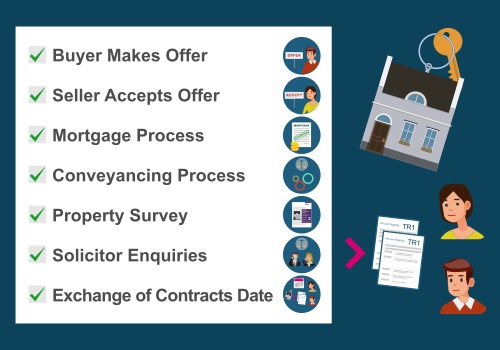
For reference, the contract exchange (signing) takes place after the following:
- Buyer makes offer
- Seller accepts offer
- Buyer’s mortgage lender values the house and the mortgage is agreed
- Buyer and sellers solicitors undertake the conveyancing process
- Buyer carries out property survey
- Enquiries are raised and dealt with
- Seller and buyer agree on a date for exchange of contracts
Pulling Out of a House Sale in Scotland
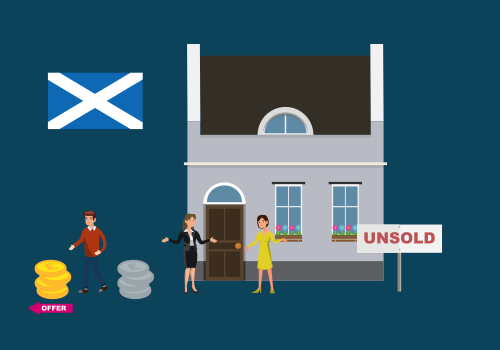
Things work a little differently in Scotland, where there is a conclusion of missives instead of an exchange of contracts. This involves the seller and buyer exchanging documents outlining the house sale.
Despite the different terminology, the process broadly works in the same way. After the missives are concluded, the sale is legally binding and the two parties will generally proceed with the sale.
Can You Pull Out of a House Sale After Signing Contracts?
The contract exchange is one of the final stages in a house purchase. After this point, you have signed a legally binding contract agreeing to proceed.
When signing your contract, terms outline the penalties you will face if you don’t comply with this legal obligation.
While you can’t usually be forced to buy or sell a house, non-compliance results in serious consequences – as we’ll detail shortly.
However, while it’s best to avoid pulling out after contracts have been exchanged, it has been known to happen occasionally.
When Can You Pull Out of a House Sale?
Although not ideal, buyers pull out of house sales before exchange of contracts without any major financial consequences.
In our experience, it tends to happen more frequently after the property survey. Other common scenarios include where one of the joint owners changes his/her mind or the property has been inherited and the siblings can’t come to an agreement.
Consequences of Pulling Out of a House Purchase After Exchange of Contracts
No matter how sure you think you are that pulling out of a house purchase is the right move, it’s always wise to be aware of the consequences first.
If you pull out after the exchange of contracts as a buyer, you risk losing your deposit. Considering house deposits in the UK are generally at least 10% of the house value, this is a significant amount. You will usually pay this money after exchanging contracts.
There’s even a risk of going to court and having to cover any losses the other party incurred.
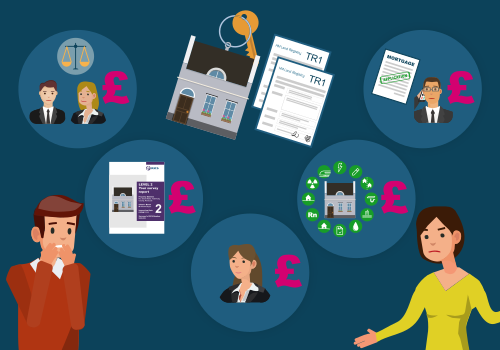
If you opt out before the exchange of contracts, the consequences aren’t quite so brutal – you’re unlikely to have to go to court, and buyers won’t lose their deposit. But there are still various “hidden” costs you have to pay for as part of the sale process.
These include:
- Conveyancing costs (for both you as the buyer and possibly for the seller’s solicitor)
- Property surveys / valuation fees
- Estate agent fees
- Conveyancing searches and other disbursements
- Mortgage advisor / application fees.
Common Reasons for Pulling Out of a House Sale
Usually, when a house falls through, it is because the buyer pulls out. Common reasons include:
- Issues with finances
- Results from a survey revealing more issues than previously expected (even though the property has been sold “as is”)
- The property is downvalued
- The mortgage company deciding that they do not wish to proceed
- Changes in personal circumstances
- Problems with another person in the property chain
- Sellers being unwilling to compromise or negotiate.
There are also cases of gazumping and gazundering before contracts are exchanged (when sellers and buyers try to get a better price).
Gazumping sellers may have received a higher bid from elsewhere, while gazundering buyers may try to drive the price at the last minute as a negotiating tactic.
This isn’t illegal as long as contracts haven’t been signed yet, but it’s certainly annoying.
How to Pull Out of a House Purchase
Decided you’re willing to accept the consequences of pulling out a house sale? Here’s how it works.
A conveyancing solicitor is the go-to person for the house sale process, and they should be the first person you tell if you want to back out. They will do the bulk of the work by informing the other parties involved.
You should also advise the estate agents who will probably be the first to contact the seller.
If you’re pulling out of the purchase after the contract exchange, there may be additional consequences, such as legal action. We’ll cover this shortly.
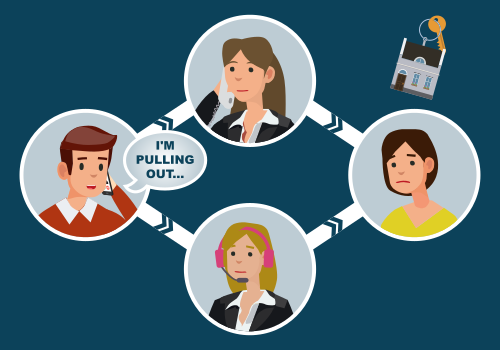
Seller Pulling Out of a House Sale
So far, this guide has focused on the process and implications of a buyer opting out of a house purchase. But what if it’s the seller who wants to back out?
Reasons for this may be that:
- They have had a change of heart and wish to stay
- Financial or personal circumstances means they can no longer sell
- Not enough equity to clear debts
- There is reason for them to suspect that their property was under priced
- They’ve received a higher offer
- The sale of their new home has fallen through
- They’re selling a tenanted property and are unable to evict the tenants.
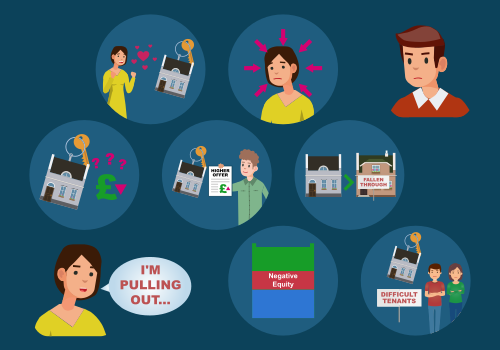
In this case, the timeline remains the same – sellers are allowed to drop out of the house sale before the contracts have been signed. They may be unable to recover certain costs such as estate agent fees.
As with buyers, the costs you’ll face will depend partly on your contract. Sometimes, documents specify that you should pay estate agents a fee if they find a willing buyer, even if you don’t want to proceed with the transaction.
You’re likely to also face conveyancing fees, but again, this will depend on the contract.
When a seller pulls out, they must also return the deposit the buyer made, and send back any documents they received at their own expense.
In the case of leasehold properties, there may be the additional complication of paying freeholders or managing agents for information before the sale. If you decide against the purchase, you cannot recover these costs.
What Happens When Someone Pulls Out of a Property Sale
The party that didn’t cause the collapsed sale will usually send a Notice to Complete, which gives the other party a grace period of ten days. This is their last chance to go ahead with the house purchase without breaching the contract.
After this point, they could face legal action as a result of the sale falling through. The other party may have the chance to claim for losses or insist on the purchase continuing.
Compensation
Some costs that can be claimed back by buyers in the case of a collapsed sale include:
- Mortgage interest
- Building insurance
- Property surveys
- Legal fees
- Accommodation costs
- Income lost from renting
- Storage
Meanwhile, sellers may be able to claim back the value of market depreciation (if application) if the sale fails due to the buyer.
The person responsible for the failed sale may also have to pay interest.
What to Do
If the other party has pulled out of the sale due to circumstances out of their control, you may be able to agree to pause the sale instead of cancelling it. However, bear in mind that most mortgage offers are only valid for six months, which can cause complications.
In a case where the buyer really wants the property and suspects the seller is gazundering, they may consider offering a higher purchase price to secure the property.
Other times, it makes more sense to accept the loss and move on by looking for a new property (or a new buyer).
How to Reduce the Risk of a House Purchase Being Cancelled
Most of us would prefer to avoid a sale falling through altogether (not least the legal proceedings that come with it). Below are some of the best ways you can reduce the risks, whether you’re a seller or a buyer.
Take Out Home Buyers Insurance

Home Buyer Protection Insurance can give you an extra blanket of society by ensuring you will be reimbursed if the seller decides to pull out.
Work with a Local Surveyor

Often, when a buyer pulls out of the process, it’s due to concerns about the house. These can be tackled by working with a qualified local property surveyor, who can help you to be confident about the state of the property you’re set to buy.
RICS-registered surveyors are some of the most reliable.
Sort Out Your Mortgage
It’s bad enough to pull out of a house sale because you have cold feet, but nobody wants to have their hands tied for them due to issues with their mortgage.
You can mitigate this risk by agreeing your mortgage with the lender before the contract exchange. Once agreed, an offer usually lasts for six months, which should give you time to finish the process.
What About Auction?
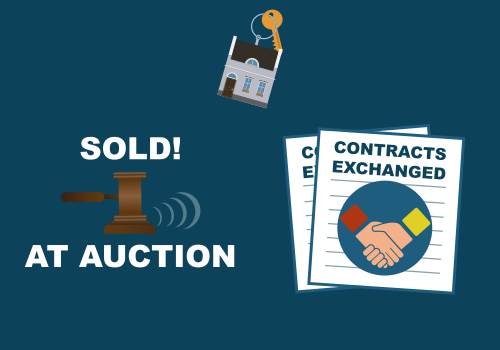
Property auctions are a slightly different matter. If you’re a buyer, it’s absolutely possible to withdraw a bid during an auction. However, if you’ve made the highest offer and won the auction, you won’t be able to back out once bidding has ended (i.e. the fall of the hammer).
The winning bid constitutes a legally binding exchange of contract, and the buyer must honour it (bar exceptional circumstances). The same goes for the seller. Once a property has been declared “sold”, the contract is complete.
Use a Property Buyer Instead
There are endless things that can go wrong when trying to sell a house. In the UK currently, 1 to 4 sales are collapsing for the reasons highlighted above.
When you work with a home buying company like Property Solvers, many of these issues disappear. Professional property buyers specialise in purchasing homes and offer a guaranteed sale, with no chains or mortgages involved. In most cases, there will also be no estate agent or legal fees involved.
What we can also guarantee is a very quick sale, sometimes in as little as 7 days. By expediting the house sale in this way, the chances of something going wrong are close to zero!


